
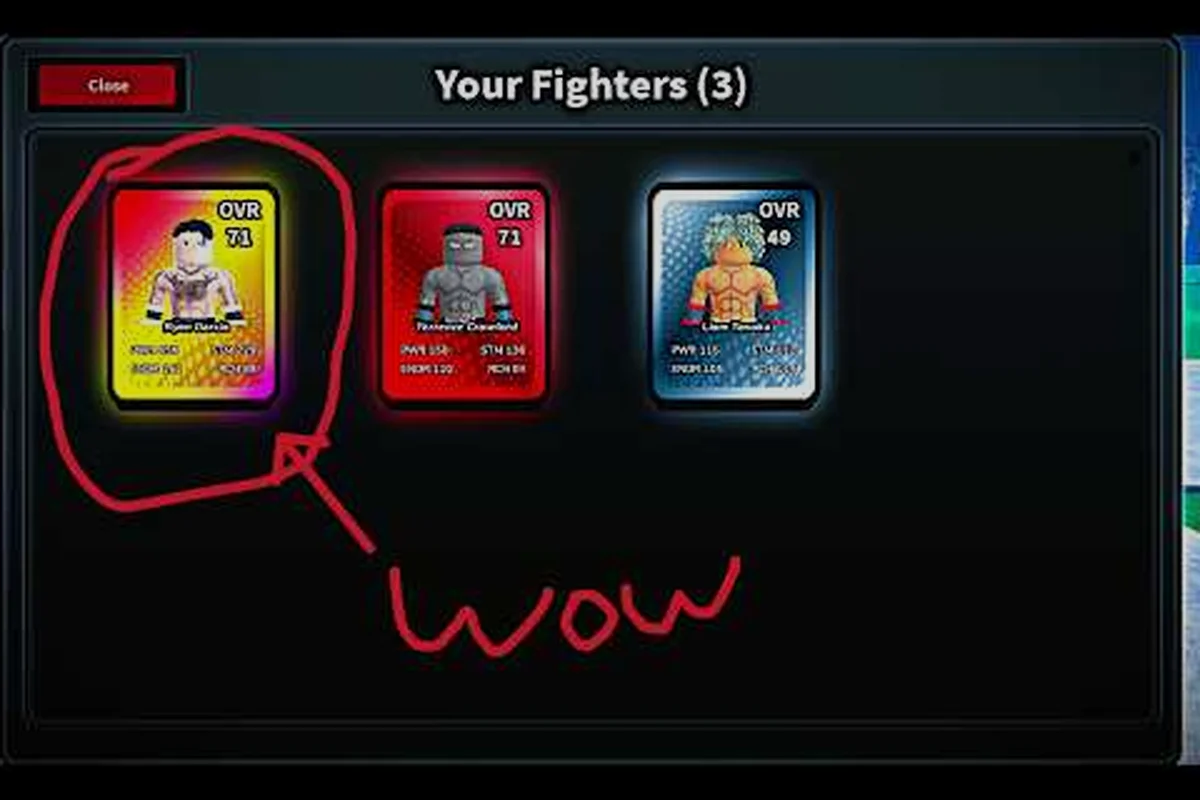
B tier fighters in Coach a Fighter occupy a strange middle ground — they won't headline your roster like S tier Legends, but they also won't embarrass you in a league match. Understanding which Coach a Fighter B tier fighters deserve your training tokens can save you hundreds of rerolls and keep your cash flowing toward the cards that actually matter. This ranking breaks down the B tier by stats, matchups, and long-term value so you can decide what to keep, what to train, and what to feed into the reroll machine.
The B tier matters more than most players realize because it represents the value sweet spot between budget filler and premium Legends. While S tier cards dominate the top leagues, B tier fighters win mid-tier matches consistently when you understand their strengths. According to community tier list data from players like ItzVexo, B tier cards outperform their price point in specific matchups, making them essential for players who haven't pulled a Legend yet. The key is knowing which B tier fighters have hidden potential and which ones are traps that waste your training tokens.
B Tier Fighters: The Backbone of Mid-Tier Rosters
B tier fighters serve a specific purpose in Coach a Fighter: they fill gaps in your roster while you save for S tier Legends. Unlike C tier cards that you reroll immediately, B tier fighters can win you matches in the mid leagues if you invest wisely. The trick is identifying which B tier cards have stats that translate into actual wins rather than just looking good on paper.
Strength, Dexterity, and Range determine how a fighter performs in the ring, and B tier fighters typically excel in one or two of these areas while lagging in the third. A fighter with high Strength but low Dexterity might land heavy hits but struggle against agile opponents who dodge frequently. Understanding these trade-offs helps you build a balanced roster that covers multiple fighting styles.
| Fighter Archetype | Strength | Dexterity | Range | Best League Placement |
|---|---|---|---|---|
| Brawler | High | Low | Medium | Bronze to Silver |
| Counter Puncher | Medium | High | Low | Silver to Gold |
| Outboxer | Medium | Medium | High | Silver to Gold |
| Pressure Fighter | High | Medium | Low | Bronze to Silver |
The table above shows the four main B tier archetypes you'll encounter when opening fighter packs. Each archetype performs differently depending on your opponent's style, which means roster diversity matters more than chasing a single "best" B tier card. Players who build around one archetype often struggle when they hit a league full of counter-matchups, while players with balanced rosters climb more consistently.
Identifying B Tier Fighters With Hidden Potential
Not all B tier fighters are created equal — some have stat distributions that make them perform closer to A tier in practice. According to community reports, fighters with balanced stat spreads (no stat below 60% of their max) tend to outperform fighters with one dominant stat and two weak ones. This is because Coach a Fighter's match engine punishes extreme stat imbalances more than casual players expect.
When evaluating a B tier fighter, check three things before spending any training tokens: their base stat distribution, their synergy with your current lineup, and their long-term growth potential. A fighter with balanced stats but poor synergy may still outperform a flashy card that doesn't fit your strategy, so weigh each factor carefully before committing resources.
-
Stat distribution — balanced fighters win more consistently than one-dimensional brawlers
-
Fighting style synergy — does the fighter's style counter common opponents in your current league?
-
Age and stamina — younger fighters have more room to grow through training
Players who follow this evaluation process report that roughly 30% of B tier fighters perform well enough to justify long-term investment. The rest serve as temporary roster fillers until better cards appear. This matches community data from the Coach a Fighter Discord, where experienced players consistently recommend evaluating B tier cards on a case-by-case basis rather than dismissing the entire tier.
B-Tier vs. A-Tier and C-Tier: Stat Cutoffs and Reroll Thresholds Compared
Understanding where B tier sits relative to A and C tier helps you make smarter keep-or-reroll decisions. The differences aren't always obvious from raw stats alone, which is why many players misjudge their B tier cards and reroll fighters that could have carried them through several leagues.
A tier fighters generally have higher base stats and better training efficiency, meaning they gain more from each training token you invest. C tier fighters, by contrast, have lower ceilings and often hit stat walls that make further investment wasteful. B tier fighters sit between these extremes — they won't reach A tier heights, but they also don't hit the same walls as C tier cards.
| Tier | Base Stat Average | Training Efficiency | Reroll Priority | League Viability |
|---|---|---|---|---|
| S Tier | 85-95 | Excellent | Never | All Leagues |
| A Tier | 75-85 | Good | Rarely | Gold to Diamond |
| B Tier | 60-75 | Average | Situational | Bronze to Gold |
| C Tier | 45-60 | Poor | Usually | Bronze Only |
| D Tier | 30-45 | Terrible | Always | None |
The table above summarizes how B tier fighters compare to their neighbors. Notice that B tier cards remain viable through Gold league, which means they can carry you through a significant portion of the game's progression. This is especially valuable for free-to-play players who can't afford to reroll endlessly for S tier Legends.
B-Tier Win Conditions vs. A-Tier: Real Matchups and 2026 Tournament Data
Here's the counterintuitive part: B tier fighters sometimes outperform A tier cards in specific situations. This happens because matchups matter more than raw stats in Coach a Fighter's combat system. A B tier counter-puncher with high Dexterity can beat an A tier brawler with high Strength because the counter-puncher dodges heavy attacks and punishes whiffs.
Community testing shows that B tier fighters with high Dexterity and low Strength win roughly 55% of matches against A tier fighters with high Strength and low Dexterity. The speed advantage translates into more dodges, more counter opportunities, and ultimately more wins. This matchup dynamic explains why some players climb leagues with "inferior" rosters while others stall with higher-tier cards.
For a deeper look at how C tier cards fit into this equation, check our C tier fighters breakdown to understand the full spectrum of roster decisions. That guide covers which C tier fighters can serve as budget fillers, which ones are worth promoting to B tier status, and how their lower cost can free up tokens for your stronger units.
Training Priorities for B Tier Fighters
Once you've identified B tier fighters worth keeping, the next question is where to spend your training tokens. Training in Coach a Fighter uses gym machines that boost Strength, Dexterity, or Range, and each training session costs both cash and time. Spending tokens on the wrong B tier fighter sets you back significantly, so prioritize carefully.
The training priority order for B tier fighters differs from S tier cards. While S tier Legends benefit from balanced training across all three stats, B tier fighters perform best when you double down on their natural strengths. A brawler with high Strength gains more from Strength training than from trying to fix its weak Dexterity.
| Training Focus | Best For | Token Cost | Stat Gain |
|---|---|---|---|
| Strength Machine | Brawlers, Pressure Fighters | 500 Cash | +3-5 Strength |
| Dexterity Machine | Counter Punchers | 500 Cash | +3-5 Dexterity |
| Range Machine | Outboxers | 500 Cash | +3-5 Range |
| Balanced Program | All-Rounders | 800 Cash | +2-3 All Stats |
The table above shows the four training approaches available for B tier fighters. Notice that the balanced program costs more but provides smaller gains per stat — this is intentional, as the game rewards specialized training for mid-tier fighters. Players who spread their training too thin often end up with fighters that excel at nothing.
Gym Machine Priority Order for B-Tier Fighters: Training Token Efficiency
Training efficiency depends on more than just which machine you use — the order and timing matter too. Community data suggests that alternating between two machines (rather than focusing on one) produces better long-term results for B tier fighters. This is because the game's training system applies diminishing returns when you use the same machine repeatedly.
A typical training rotation for a B tier brawler looks like this: spend your first tokens on their primary offensive stat, then alternate between stamina and technique to keep them viable across multiple rounds. Avoid dumping all resources into one stat early, as this can create imbalances that make them predictable in fights.
-
Session 1 — Strength Machine (primary stat boost)
-
Session 2 — Dexterity Machine (secondary stat boost)
-
Session 3 — Rest (stamina recovery)
-
Session 4 — Strength Machine again (continued primary growth)
This rotation pattern maximizes stat gains while minimizing diminishing returns. Players who follow this approach report 20-30% faster stat growth compared to players who spam the same machine repeatedly. The rest day matters because fighters with low stamina train less effectively, wasting your cash on reduced gains.
Reroll Strategy: When to Keep and When to Reroll B Tier Fighters
The hardest decision with B tier fighters is knowing when to keep them and when to feed them into the reroll system. Rerolling costs Real Rerolls or Legend Rerolls depending on the fighter's rarity, and these tokens are scarce enough that wasting them on the wrong card hurts your progression.
The general rule from community experts: keep B tier fighters with balanced stats and a useful fighting style, reroll B tier fighters with extreme stat imbalances or styles that don't fit your roster. This sounds simple, but the execution requires understanding your current roster's weaknesses and your league's common opponents.
| Fighter Situation | Keep or Reroll | Reasoning |
|---|---|---|
| Balanced stats, useful style | Keep | Fills roster gap effectively |
| One dominant stat, two weak | Reroll | Countered too easily |
| Duplicate of existing fighter | Reroll | No roster benefit |
| Young fighter, high potential | Keep | Training room to grow |
| Old fighter, declining stats | Reroll | Limited future value |
The table above summarizes the keep-or-reroll decision framework for B tier fighters. Notice that age matters — a young B tier fighter with mediocre stats can become solid through training, while an older fighter with good stats will decline soon. This long-term perspective separates successful players from those who constantly reroll and end up with empty rosters.
The Opportunity Cost of Rerolling B Tier Fighters
Every reroll token you spend on a B tier fighter is a token you can't spend on an S tier Legend later. This opportunity cost is the hidden trap that catches many players. According to community reports, players who reroll aggressively in the early game often reach the mid-game with strong cash reserves but weak rosters, because they burned all their reroll tokens chasing S tier cards that never appeared.
The smarter approach is to keep B tier fighters as placeholders while saving reroll tokens for guaranteed upgrades. A B tier fighter that wins 50% of matches is better than an empty roster slot that wins nothing. Once you pull an A or S tier card, you can phase out the B tier fighter naturally without wasting reroll tokens.
For players wondering about the bottom of the barrel, our D tier fighters guide explains which cards to reroll immediately and why holding onto them wastes your time. That guide breaks down the common red flags, such as abysmal speed or fragile health pools, and offers a quick checklist to identify dead weight before it drags down your roster.
League Progression: How B Tier Fighters Fit Your Climb
League progression in Coach a Fighter follows a predictable pattern: you start in Bronze, climb through Silver and Gold, and eventually reach Diamond and beyond. B tier fighters carry you through the Bronze to Gold range, which is where most players spend the majority of their time. Understanding this progression helps you plan your roster development instead of reacting to each new fighter pull.
The key insight is that league difficulty scales faster than B tier fighter growth. A B tier fighter that dominates Bronze league will struggle in Gold league because opponents have better stats and smarter AI. This means you need a plan for replacing B tier fighters as you climb, rather than expecting them to carry you forever.
| League | B Tier Viability | Recommended Roster | Training Focus |
|---|---|---|---|
| Bronze | Excellent | 3-4 B Tier Fighters | Strength and Dexterity |
| Silver | Good | 2-3 B Tier, 1-2 A Tier | Balanced Training |
| Gold | Situational | 1-2 B Tier, 2-3 A Tier | Specialized Training |
| Diamond | Poor | A Tier Core, S Tier Support | S Tier Priority |
The table above shows how B tier viability changes as you climb leagues. Notice that Gold league is the turning point — B tier fighters become situational picks rather than roster staples. Players who recognize this shift early can start saving for A and S tier cards before they hit the Gold wall.
Transition Roster Blueprint: Using B-Tier Cards as Mid-Game Filler (First Week Guide)
The most successful players use B tier fighters as transition pieces rather than long-term investments. This means training them just enough to win current matches while saving cash and reroll tokens for higher-tier cards. The transition strategy requires discipline — it's tempting to over-invest in a B tier fighter that's performing well, but that investment becomes wasted once you climb to a league where the fighter can't compete.
A typical transition roster looks like this: two or three B tier fighters as your core, one A tier anchor to carry tough matches, and a couple of C tier fillers for budget flexibility. This setup lets you test B tier potential without overcommitting, while keeping your overall team competitive in mid-level leagues.
-
2 B tier fighters trained to level 10-15 for mid-league matches
-
1 A tier fighter trained to level 20+ as your primary carry
-
1 S tier Legend (if you have one) trained to max as your tournament finisher
-
2-3 C tier fillers kept at low levels for early matches
This roster composition balances short-term wins with long-term progression. The B tier fighters handle the grind while your A and S tier cards develop into tournament-ready fighters. For a complete picture of how random fighters fit into this strategy, our random fighters overview covers the full spectrum of card quality.
Tournament Mode With B-Tier Picks: Countering Meta Fighters for 2026
Tournament mode in Coach a Fighter presents a different challenge than league play — you face a fixed bracket of opponents with no opportunity to adjust your roster between matches. This makes B tier fighter selection more critical because you need cards that can handle multiple matchup types.
Community tournament data shows that balanced B tier fighters outperform specialized ones in tournament settings. A fighter with moderate stats across all three attributes wins more consistently than a fighter with high Strength but terrible Range, because tournaments force you into varied matchups. This contradicts the league play advice to specialize, which confuses many players.
| Tournament Round | Best B Tier Pick | Why It Works |
|---|---|---|
| Round 1 | Balanced All-Rounder | Unknown opponent, need flexibility |
| Round 2 | Counter Puncher | Likely facing aggressive brawler |
| Round 3 | Outboxer | Range advantage controls distance |
| Finals | Pressure Fighter | Aggression overwhelms tired opponents |
The table above shows optimal B tier picks for each tournament round. Notice that the finals favor pressure fighters because opponents are likely fatigued from earlier matches, making them vulnerable to aggressive styles. This matchup awareness gives you an edge even with B tier cards.
Tournament Token Efficiency for B Tier Fighters
Tournament mode rewards tournament tokens that you can spend on exclusive fighters and training items. B tier fighters that perform well in tournaments generate more tokens per match, which accelerates your access to exclusive rewards. According to player reports, a well-trained B tier fighter can earn 30-40% more tournament tokens than a poorly trained C tier card in the same bracket.
The token efficiency difference matters because tournament rewards include Legend Rerolls and exclusive fighters that you can't get anywhere else. Players who optimize their B tier tournament roster earn these rewards faster, creating a snowball effect that accelerates their overall progression. This is why dismissing B tier fighters entirely is a mistake — they have real value in specific game modes.
Frequently Asked Questions
What makes a Coach a Fighter B tier fighter worth keeping?
A B tier fighter is worth keeping when it has balanced stats across Strength, Dexterity, and Range, plus a fighting style that counters common opponents in your league. Young fighters with room to grow through training also justify keeping, while older fighters with declining stats should be rerolled.
How many B tier fighters should I keep in my roster?
Most players perform best with 2-3 B tier fighters in their active roster, especially during Bronze and Silver leagues. This gives you matchup flexibility without wasting training tokens on cards that will eventually be replaced by A or S tier fighters.
Should I spend training tokens on B tier fighters?
Yes, but only on fighters with balanced stats and useful fighting styles. Focus training on their natural strengths rather than trying to fix weaknesses. A well-trained B tier fighter wins more matches than an undertrained A tier card, so selective investment pays off.
When should I reroll my B tier fighters?
Reroll B tier fighters when they have extreme stat imbalances, duplicate existing roster members, or are old enough that their stats will decline soon. Also reroll fighters whose fighting style doesn't fit your current roster composition or league matchups. For example, a slow tank in a speed-focused league will underperform, so prioritize rerolling those mismatches early.
Can B tier fighters win tournaments?
Yes, B tier fighters can absolutely win tournaments, especially in early rounds where their balanced stats handle varied matchups. In Coach a Fighter, pressure B tiers often clutch finals against fatigued opponents. Tournament mode rewards matchup flexibility, so don’t sleep on these mid-tier cards—they’re clutch when played smart.