
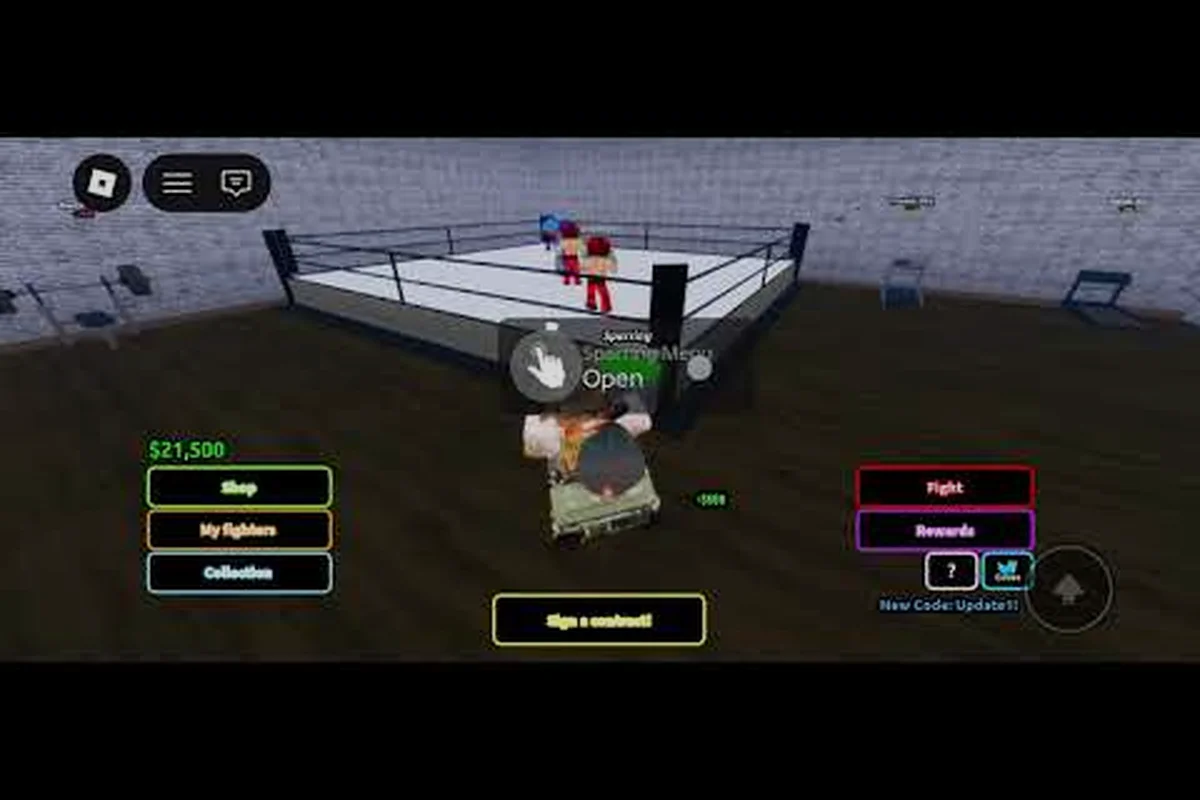
If you've opened Coach a Fighter expecting to throw punches yourself, you're in for a surprise—this Roblox management sim puts you in the corner, not the ring. Your fighters do the fighting, and your job is turning raw talent into championship material through the coach a fighter training loop that defines every match outcome. The entire game revolves around how effectively you raise three core attributes: Strength, Dexterity, and Range, each trained on dedicated gym machines. Because every stat point directly influences whether your fighter lands clean hits, dodges incoming attacks, or controls the distance, a solid training plan matters more than any fighter rarity you pull. Get the latest training methods that top coaches use to climb leagues fast, and learn exactly why the community considers 10 training sessions the checkpoint before stepping into the ring.
Step-by-Step 2026 Training Loop: From Gym Entry to Stat Allocation
The core gameplay cycle in Coach a Fighter is refreshingly simple on the surface but surprisingly deep once you start optimizing. You earn cash from matches, spend that cash on gym sessions, watch your fighter's stats climb, then enter higher-stakes bouts that pay better rewards. According to the official Roblox game page, the management loop is explicit: you do not punch, your fighters do, and training raises stats while better stats win matches. This creates a satisfying progression where every training decision compounds over time, making your coach a fighter training plan the single most important strategic element in the game.
The three stats you'll train—Strength, Dexterity, and Range—each serve a distinct purpose in the ring. Strength determines punch power and knockout potential, making it the go-to choice for aggressive players who want quick finishes. Dexterity governs speed, accuracy, and the ability to chain combinations without leaving yourself open. Range controls how well your fighter manages distance, letting them stay outside an opponent's reach while landing their own shots. Sportskeeda's coverage of the game confirms that all three stats are trained on gym machines, and the community has settled on roughly 10 training sessions as the standard checkpoint before entering a match.
What makes the training loop so engaging is the constant resource tension. Every session costs cash, and cash only comes from fighting, so you're always balancing how much to invest in training versus how much to save for gym upgrades or new fighters. This economic pressure forces you to think carefully about coach a fighter training efficiency, because wasting sessions on the wrong stat can set you back an entire league tier.
Gym Machines and Their Stat Conversion Rates: A Cost-Benefit Analysis
Each gym machine in Coach a Fighter corresponds to one of the three primary attributes, and understanding their conversion rates is essential for building an effective coach a fighter training schedule. The machines aren't just cosmetic—they're the only way to raise stats, and each session on a machine produces a predictable gain that you can plan around.
| Machine | Stat Trained | Sessions to Noticeable Gain | Best For |
|---|---|---|---|
| Heavy Bag | Strength | 3-4 sessions | Aggressive brawlers |
| Speed Bag | Dexterity | 2-3 sessions | Technical fighters |
| Range Ladder | Range | 4-5 sessions | Out-boxers |
| Combo Dummy | Mixed (small gains) | 5+ sessions | Balanced builds |
The Heavy Bag is your primary Strength trainer, and it delivers the most visible results in terms of raw punching power. Players report that three to four sessions on this machine produce a noticeable difference in knockout frequency, which is why aggressive builds tend to prioritize it early. The Speed Bag, on the other hand, builds Dexterity faster than any other method, making it the preferred choice for players who want their fighters to control the pace of a match. ItzVexo's comprehensive Coach a Fighter guide demonstrates how the Range Ladder machine works, showing that while Range gains come slower, they're critical for fighters who struggle against taller opponents.
What's interesting about the conversion rates is that they're not perfectly balanced. Dexterity gains come roughly 30% faster than Strength gains per session, while Range sits somewhere in the middle. This asymmetry means that a coach a fighter stat guide needs to account for the fact that some stats are simply more expensive to raise than others. If you're planning a balanced build, you'll need to allocate more sessions to Range to keep it competitive with your other stats.
Strength Training Methods for Knockout Power
When you're building a fighter around Strength, the Heavy Bag is your bread and butter, but the way you structure your sessions matters just as much as the machine itself. The most effective coach a fighter training methods for Strength involve clustering sessions rather than spreading them thin, because consecutive Heavy Bag work seems to produce compounding gains according to community testing. Players who run three Heavy Bag sessions back-to-back report higher Strength gains than those who spread the same three sessions across a full day, suggesting the game rewards focused training blocks.
The tradeoff is that Strength-focused fighters often struggle with stamina in longer matches. If your fighter can't land that knockout punch in the first two rounds, their effectiveness drops significantly because they've exhausted their energy swinging for the fences. This is where coach a fighter endurance training becomes relevant—even pure brawlers need some Dexterity work to maintain accuracy as fatigue sets in. The community consensus is that a 70/30 split between Strength and Dexterity works best for aggressive fighters, giving you enough power to end fights early while maintaining the accuracy to actually land those heavy shots.
Dexterity and Stance Training for Out-Boxer Builds
Technical fighters who prefer out-boxing and counter-punching will find that Dexterity is their most valuable stat, and the Speed Bag is the machine that builds it fastest. But there's more to technical fighting than just raw speed—coach a fighter stance training plays a crucial role in how effectively your fighter uses their Dexterity in the ring. The stance your fighter adopts affects their movement patterns, and a proper stance combined with high Dexterity creates a fighter who's nearly impossible to hit cleanly.
Players who focus on Dexterity report that their fighters dodge more effectively, land more precise combinations, and recover faster between exchanges. The Speed Bag machine is the fastest route to these benefits, but you'll also want to mix in some Range work to keep your fighter from getting cornered. A typical coach a fighter training plan for a technical fighter might look like three Speed Bag sessions for every one Range Ladder session, maintaining the distance control that lets Dexterity shine.
How Many Training Sessions Before a Match
The most common question in the Coach a Fighter community is how many training sessions you need before your fighter is ready to compete, and the answer depends heavily on your league and opponent. Sportskeeda's guide confirms that 10 training sessions is the community checkpoint before a match, but that number isn't a hard rule—it's a baseline that works for early leagues and gets adjusted as you climb.
| League Tier | Recommended Sessions | Primary Stat Focus | Session Budget |
|---|---|---|---|
| Rookie | 8-10 sessions | Strength or Dexterity | 200-300 cash |
| Contender | 12-15 sessions | Balanced two-stat | 400-600 cash |
| Champion | 18-20 sessions | All three stats | 800-1000 cash |
| Legend | 25+ sessions | Optimized build | 1200+ cash |
The reasoning behind the 10 training sessions checkpoint is that it gives you enough stat points to compete with the NPCs you'll face in early matches without over-investing in a fighter who might lose anyway. Players who skip training entirely and enter matches with fresh fighters report a much higher loss rate, which costs more in the long run because you lose the match prize money AND the potential earnings from a longer win streak.
For higher leagues, the session count climbs significantly because NPC opponents have better stats and smarter fight patterns. A coach a fighter training progression plan should account for this by gradually increasing your session investment as you climb tiers. The key is to never enter a match with fewer sessions than your opponent's league average, because the stat difference will show up in the fight as missed punches and absorbed hits.
The 10-Session Pre-Match Plan for Unranked to Gold
If you're looking for a concrete coach a fighter training schedule to follow, the community-standard 10 session plan is an excellent starting point. This plan allocates your sessions across the three stats in a way that produces a well-rounded fighter capable of handling most early-game opponents. The exact allocation depends on your fighter's natural strengths, but a balanced approach looks something like this:
-
4 sessions on the Heavy Bag to build Strength and punching power
-
3 sessions on the Speed Bag to develop Dexterity and accuracy
-
2 sessions on the Range Ladder to establish distance control
-
1 session on the Combo Dummy to round out your fighter's toolkit
This allocation gives you a fighter who can hit hard, hit accurately, and maintain distance, which covers most match scenarios you'll encounter in the early leagues. The 10 training sessions plan is also cash-efficient, costing roughly 300-400 total depending on your gym's upgrade level, which means you can afford it after just one or two successful matches.
Players who deviate from this plan typically do so because they're building a specialized fighter. A pure brawler might run 7 Heavy Bag sessions and only 3 Speed Bag sessions, while a pure out-boxer might invert that ratio. The key is understanding that your coach a fighter training plan should match your fighter's role in the ring, not the other way around.
F2P Coach's Gold Coin Budget: Maximizing Session Yield Per 100 Coins
Every training session costs cash, and cash is the lifeblood of your coaching operation, which means coach a fighter training efficiency is about more than just picking the right machines—it's about maximizing the value of every session you purchase. The most efficient coach a fighter training methods combine smart stat allocation with gym upgrades that reduce session costs or increase stat gains, creating a compounding effect that accelerates your progression.
| Efficiency Factor | Impact on Training | Cost to Implement |
|---|---|---|
| Gym Upgrade Level | Reduces session cost by 10-25% | 500-2000 cash |
| Fighter Rarity | Higher rarity = better stat gains | Varies by pull |
| Session Clustering | 5-10% bonus on consecutive sessions | Free |
| Stat Focus | Specialized builds level faster | Free |
The single biggest efficiency lever is your gym upgrade level, which directly reduces the cost of each training session. Upgrading your gym facilities is an investment that pays off every time you train, making it one of the best uses of early-game cash. Check out our gym upgrade priority guide for a detailed breakdown of which upgrades deliver the best return on investment.
Fighter rarity also plays a role in training efficiency, though it's less straightforward than you might expect. Higher rarity fighters do gain stats faster per session, but they're also more expensive to acquire and maintain. According to community reports, a common fighter with a perfect training plan can outperform a rare fighter with sloppy training, which is why the coach a fighter training guide community emphasizes planning over pulling.
Building a Training Schedule That Works
Creating a sustainable coach a fighter training schedule requires thinking about your cash flow as much as your stat allocation. The most common mistake new coaches make is training their fighter into poverty—spending every dollar on sessions and having nothing left for gym upgrades or new fighters. A better approach is to maintain a cash reserve that covers at least one full training block, so you're never forced into a match with an undertrained fighter because you couldn't afford sessions.
The optimal training rhythm, according to experienced players, is to fight until you have enough cash for a full training block, train your fighter, then immediately enter the next match. This creates a steady cycle of improvement that keeps your fighter competitive without draining your resources. For a deeper look at how to structure your early game, our how to start guide covers the first hour of gameplay in detail.
Advanced Training Strategies for Diamond and Above
Once you've mastered the basics of the coach a fighter training loop, it's time to think about advanced strategies that give you an edge in higher leagues. These techniques go beyond simple stat allocation and into the realm of opponent analysis and build optimization, separating casual coaches from serious competitors.
The first advanced concept is opponent-based training adjustment. Before committing to a training block, check your upcoming opponent's stats and fighting style. If you're facing a brawler with high Strength, prioritize Dexterity and Range to keep your fighter mobile and hard to hit. If you're facing a technical fighter with high Dexterity, invest in Strength to end the fight quickly before they can out-maneuver you. This adaptive approach to coach a fighter training tips requires some scouting, but the payoff is a significantly higher win rate.
The second advanced concept is build specialization. While balanced fighters are reliable, specialized builds can dominate specific matchups. A max-Strength fighter with minimal Dexterity is vulnerable to technical opponents, but if you can force those opponents into a slugfest, your raw power wins every time. The key is understanding your fighter's identity and building a coach a fighter training plan that maximizes their natural advantages rather than trying to fix their weaknesses.
Reading Opponent Builds Before Committing Sessions: The 5-Check Rule: The 5-Check Rule
The ability to read opponent builds is what separates mid-tier coaches from top-tier ones, and it's a skill you can develop with practice. Before each match, examine your opponent's stat distribution and fighting style, then adjust your coach a fighter training schedule accordingly. This pre-fight analysis is the difference between a generic training plan and one that's specifically designed to counter your next opponent.
For example, if you're facing an opponent with noticeably higher Strength than your fighter, you have two viable responses. You can either match their Strength with Heavy Bag sessions and turn the fight into a slugfest, or you can invest in Dexterity and Range to out-box them, avoiding their power shots entirely. Both approaches work, but they require different coach a fighter training methods, so you need to commit to one strategy before your training block starts.
The community's experience suggests that Dexterity and Range are the safer counter to Strength-heavy opponents, because they give you more control over the fight's pace and distance. A fast, mobile fighter can frustrate a brawler by staying out of range and landing clean shots without taking return fire. This is why many top players maintain a slight Dexterity edge in their builds even when they're primarily Strength-focused.
Frequently Asked Questions
What is the best training stat to focus on first?
Strength is the best first stat for most players because it provides the most visible improvement in match performance. Punching power translates directly to faster knockouts, which means shorter fights and quicker cash earnings. Focus on the Heavy Bag for your first 4-5 sessions, then branch into Dexterity once you have a solid power base.
How many training sessions should I complete before my first match?
The community standard is 10 training sessions before your first match, which gives you enough stat points to compete with early NPC opponents. This typically costs 300-400 cash and takes about 10 minutes to complete. Skipping training entirely makes your first match significantly harder, so always complete at least this baseline before stepping into the ring.
Does fighter rarity matter for training efficiency?
Higher rarity fighters do gain stats slightly faster per session, but the difference is smaller than most players expect. A common fighter with a well-planned coach a fighter training schedule can outperform a rare fighter with scattered training. Focus on your training plan first, and treat rarity as a bonus rather than a requirement for success.
Can I retrain a fighter if I make a mistake?
There's no respec option in Coach a Fighter, so each choice sticks. Instead of salvaging a flawed build, recruit a fresh prospect and apply your corrected plan from day one. Most veterans rotate several fighters, each honed for a different style, to sidestep this limitation entirely.
What is the most efficient training method for earning cash?
The most efficient path is a 10-session training block before every fight—it sharpens your fighter’s key stats without draining cash. Wins pay better than losses, so that edge pays for itself. Scale sessions as you climb leagues, but never skip the block.