
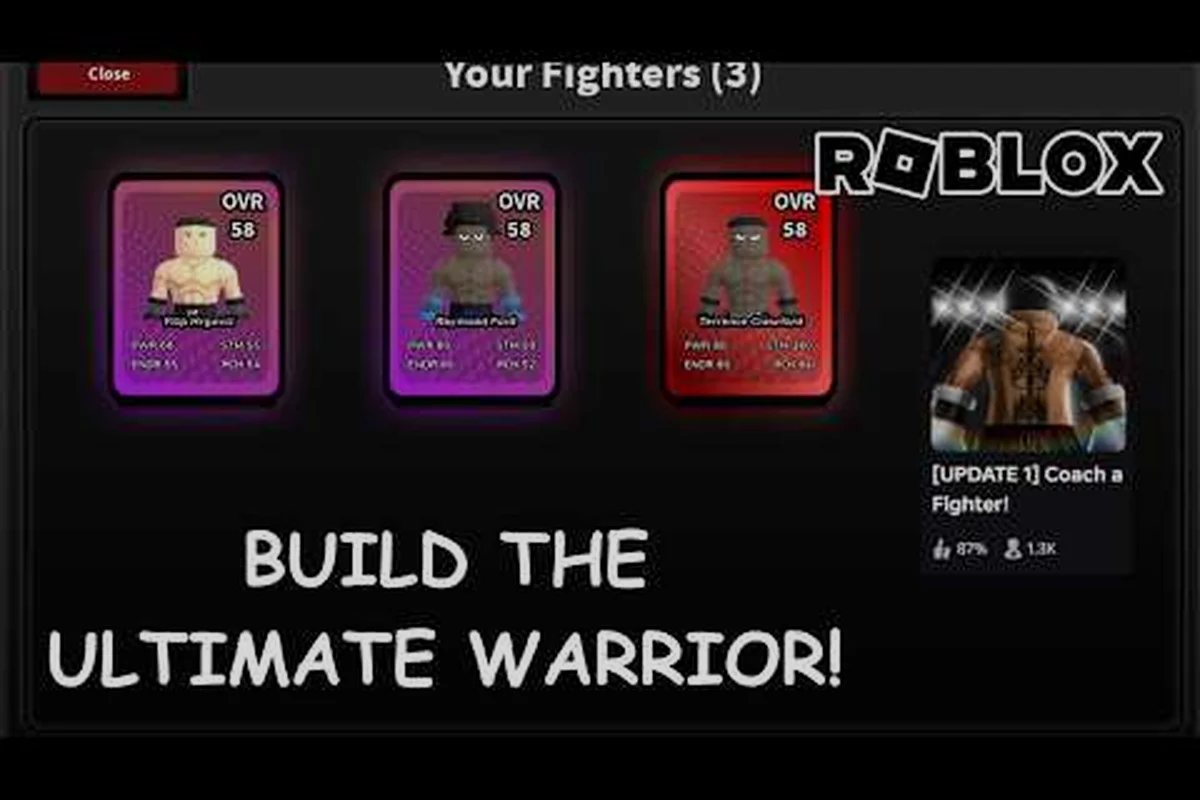
Every coach in Coach a Fighter faces the same wall: your fighter only wins when their stats say so. The management loop is clear — you do not punch, your fighters do — which means coach a fighter train stats is the single most important skill you can develop. Training raises Strength, Dexterity, and Range on gym machines, and better stats win matches. Period.
The community checkpoint sits at roughly 10 training sessions before a match, according to player reports on Sportskeeda, but blindly grinding machines wastes cash and energy. This guide breaks down exactly which machines matter, how many sessions each stat needs, and how to structure your gym time so your fighter steps into the ring ready to dominate.
Strength, Dexterity, and Range: A Trainer's Guide to Core Gym Machines
Coach a Fighter keeps things elegantly simple with three core stats, each tied to specific gym equipment. Understanding what each machine actually does — and how the stat converts into ring performance — separates coaches who climb leagues from those stuck in the prelims.
Strength governs punch power and knockout potential. The heavy bag and free weights build this stat, and every point translates directly into harder hits that stagger opponents faster. Dexterity controls speed, footwork, and combo fluidity — the speed bag and agility ladder are your tools here. Range determines how effectively your fighter controls distance, built through the double-end bag and reach trainer.
| Stat | Primary Machines | Match Impact | Community Priority |
|---|---|---|---|
| Strength | Heavy Bag, Free Weights | Knockout power, damage per hit | High for brawlers |
| Dexterity | Speed Bag, Agility Ladder | Combo speed, dodge rate | High for technicians |
| Range | Double-End Bag, Reach Trainer | Distance control, counter accuracy | Medium-High |
The Roblox game page confirms this loop: training raises stats, and better stats win matches. That sounds obvious, but the nuance lies in how each machine converts a session into stat gains — not all equipment is created equal, and your fighter's rarity influences the conversion rate.
Machine Conversion Rates: Turning Each Session into Strength, Dexterity, or Range Points
Community testing from ItzVexo's training guide highlights that stat conversion rates vary by machine tier. Basic machines give roughly 1-2 stat points per session, while upgraded equipment can push 3-4 points. This matters because your cash budget is finite, and wasting sessions on low-tier machines when you could save for upgrades stalls your progression.
Fighter rarity also plays a role — common fighters might gain 1 point per session on the heavy bag, while epic fighters gain 2-3 points on the same machine. This doesn't mean rare fighters are mandatory, but it does mean your training plan should account for your fighter's baseline. A solid stat build matters more than raw rarity when facing NPCs in higher leagues, as ItzVexo's guide demonstrates.
Building Your Pre-Match Training Schedule
The 10-session checkpoint reported by the community gives you a concrete target, but how you allocate those sessions depends entirely on your fighter's build and your opponent's tendencies. A balanced approach works for most situations, though specialized fighters benefit from focused routines.
Coach a fighter train before match sessions should follow a priority framework: fix weaknesses first, then amplify strengths. If your fighter gets outboxed constantly, Range deserves extra sessions. If you're losing by knockout, Strength needs attention. The mistake most new coaches make is grinding the same machine every day because it feels productive.
| Session Type | Strength | Dexterity | Range | Best For |
|---|---|---|---|---|
| Balanced | 4 | 3 | 3 | New fighters, unknown opponents |
| Brawler | 6 | 2 | 2 | Aggressive pressure fighting |
| Technician | 2 | 5 | 3 | Counter-punching, speed builds |
| Out-Boxer | 2 | 3 | 5 | Distance control, jab-heavy style |
The 10-Session Pre-Match Plan: A Stat-Specific Breakdown for Coaches: A Stat-Specific Breakdown for Coaches
Here's a practical breakdown that follows the community's 10-session checkpoint while staying flexible: it's a proven baseline, not a rigid rule. You can adapt the split to your fighter's archetype, the opponent you're facing, or even your personal playstyle. The key is to treat those ten sessions as a minimum foundation—covering core stats—before you start specializing. This approach keeps you competitive early on while leaving room for adjustments as you climb ranks.
-
Sessions 1-3: Focus on your fighter's weakest stat to patch obvious holes. If your fighter has 20 Strength but 12 Dexterity, those first three sessions go to the speed bag.
-
Sessions 4-7: Split between your primary stat and secondary stat. A balanced fighter might alternate Strength and Range here, while a brawler doubles down on the heavy bag.
-
Sessions 8-10: Polish your fighter's signature stat. This is where you push the number that wins matches — the knockout power or the lightning-fast combos.
This structure ensures every fighter enters the ring with no glaring weaknesses while still showcasing their strengths. Players report that skipping the weakness-patching phase leads to exploitable matchups, especially against NPCs that punish low Dexterity with relentless pressure. For example, a fighter with strong Power but weak Dexterity will struggle to land hits against agile opponents, turning what should be a winnable fight into a frustrating loss. Investing those early sessions in balance pays off in consistency.
Cash Efficiency in Gym Machine Upgrades: A Coach's Training Guide
Cash is the real boss fight in Coach a Fighter's training loop. Every session costs money, and gym upgrades eat your profits quickly. The key insight from community data is that training efficiency compounds — upgraded machines give more stat points per session, which means fewer sessions needed, which means less cash spent overall.
Coach a fighter train faster requires a deliberate upgrade order. Most players recommend upgrading your primary stat's machine first, because that's where you'll spend most sessions. A Level 2 heavy bag might cost 500 cash but gives 3 Strength per session instead of 2 — that's a 50% efficiency boost that pays for itself within 10 sessions.
| Upgrade Tier | Cost | Stat Gain Per Session | Break-Even Sessions |
|---|---|---|---|
| Level 1 (Base) | Free | 1-2 points | N/A |
| Level 2 | 500 cash | 2-3 points | 8-10 |
| Level 3 | 1,200 cash | 3-4 points | 12-15 |
| Level 4 | 2,500 cash | 4-5 points | 18-20 |
The break-even math matters because cash spent on upgrades is cash not spent on match entry fees. If you're sitting at 600 cash with a Level 1 heavy bag, the Level 2 upgrade pays off within 10 sessions — but only if you actually run those sessions before your next match. Timing your upgrades around match schedules is part of the strategic layer that veteran coaches master.
Energy Management for a 10-Session Pre-Match Training Block
Energy adds another constraint to the training loop. Each session consumes energy, and running out mid-routine forces you to either wait or spend cash on recovery items. Energy management during training is the hidden skill that separates efficient coaches from cash-burning ones.
The community consensus is to never train below 20% energy because the stat gain penalty kicks in. Some players report reduced conversion rates when training while exhausted, though exact numbers vary by fighter. The safe play is to structure your 10 sessions across two energy bars rather than cramming everything into one exhausted grind.
Reading Opponent Builds Before Committing Sessions
Scouting isn't just for match day — it should shape your training decisions. Before you commit sessions, check your opponent's stats if the game shows them. NPCs in higher leagues follow predictable patterns, and reading opponent builds before committing sessions lets you tailor your training to counter their style.
A speed-heavy opponent with high Dexterity punishes slow fighters, so your Range stat becomes critical for keeping them at distance. A power puncher with massive Strength needs to be out-boxed, which means Dexterity and footwork take priority. This counter-picking layer adds depth to what might seem like a simple grind.
| Opponent Style | Counter Stat | Why It Works |
|---|---|---|
| Speedster (High Dex) | Range | Keep them at distance, limit combo opportunities |
| Brawler (High Str) | Dexterity | Dodge power shots, punish whiffs |
| Out-Boxer (High Range) | Strength | Close distance, force exchanges |
| Balanced | Balanced | Mirror their stats, win on execution |
The coach a fighter train fighter decision tree starts with scouting. If you skip this step, you're training blind — and blind training leads to lost matches against opponents who exploited your weaknesses. Players report that consistent scouting before training sessions dramatically improves win rates, especially in the mid-leagues where NPCs start showing distinct stat profiles.
2026 Scout-to-Session Shift: Countering Brawler, Technician, and Out-Boxer Stances
Once you've identified the opponent's style, adjust your session allocation accordingly. A speedster matchup might shift your balanced 4-3-3 split to a 2-3-5 Range-heavy plan, letting you keep distance and control the pace. A brawler matchup flips it to 5-3-2 with extra Dexterity for dodging, since you'll need quick reflexes to avoid their heavy hits. These tweaks aren't just theoretical—they're practical counters that experienced players use to turn unfavorable fights into wins.
This flexibility is why rigid training plans fail — the meta shifts as you climb leagues, and what worked in Bronze gets punished in Silver. Keep your core routine but leave 2-3 sessions flexible for counter-training based on your scouting report.
Advanced Coach Strategies for Climbing League Tiers in 2026
Once you've mastered the basics, the advanced layer involves min-maxing your stat allocation based on league-specific meta trends. Higher leagues feature NPCs with more specialized builds, and the community reports that balanced fighters start struggling around League 4-5 because they lack a decisive edge.
Specialization beats balance in higher leagues — a fighter with 40 Strength and 20 Dexterity outperforms a 30-30-30 balanced build against most NPCs, because the specialized fighter wins exchanges decisively rather than slightly. The tradeoff is vulnerability to counter-styles, which is where scouting becomes essential.
The training loop also interacts with fighter progression. As your fighter levels up, base stats increase, which means the value of each training session shifts. A Level 10 fighter with 50 base Strength gains less relative value from a heavy bag session than a Level 3 fighter with 15 base Strength. This diminishing return curve should influence when you switch training focus.
| League Range | Recommended Focus | Training Sessions Per Match |
|---|---|---|
| Bronze-Silver | Balanced foundation | 8-10 |
| Gold-Platinum | Primary stat specialization | 10-12 |
| Diamond+ | Counter-training + specialization | 12-15 |
Players report that the 10-session checkpoint works well through Gold, but Diamond and above often requires 12-15 sessions to stay competitive. The extra sessions fund the specialized stat pushes that win close matches, like boosting Range to out-trade a sniper or adding Power to break through a tank's defense. At higher ranks, opponents have optimized builds, so you can't afford to leave any stat underdeveloped. Planning for those extra sessions early helps you avoid scrambling later.
Hard Ceiling Checkpoints: Fighter Stat Caps and Rank-Up Gates for Unranked to Master
Knowing when to stop is as important as knowing how to train. When to stop training a fighter comes down to two factors: stat caps and opportunity cost. Every fighter has a maximum stat ceiling based on their rarity and level, and once you approach that ceiling, training sessions yield minimal gains.
The opportunity cost angle is simpler: if your fighter is match-ready and you're just grinding for marginal gains, that cash and energy is better spent on a new fighter or gym upgrades. Community data suggests stopping training once your primary stat hits 80% of the fighter's cap — the remaining 20% costs disproportionately more sessions and rarely changes match outcomes.
For deeper dives into specific stat strategies, check our strength training guide and the dexterity training breakdown for specialized routines. If you're curious about how training translates into actual match rewards, the match rewards overview covers the payout structure. These resources complement this guide by showing you how to optimize each stat individually and what you'll earn from your efforts, giving you a complete picture of the training-to-reward pipeline.
Frequently Asked Questions
How many training sessions should I complete before a match?
The community checkpoint is roughly 10 training sessions before a match, according to player reports on Sportskeeda. This gives your fighter a solid stat foundation without draining your cash reserves. Higher leagues may require 12-15 sessions, especially if you're counter-training against a specific opponent's build.
Which stat should I prioritize when training a new fighter?
Start with your fighter's weakest stat to patch obvious holes, then shift to your primary combat style. A balanced 4-3-3 split across Strength, Dexterity, and Range works well for new fighters. Once you identify your preferred fighting style, specialize accordingly — brawlers need Strength, technicians need Dexterity, out-boxers need Range.
Can I train my fighter faster by upgrading gym machines?
Yes, upgrading gym machines significantly speeds up training. A Level 2 heavy bag gives 2-3 Strength per session instead of 1-2, which means fewer sessions to reach your target. The break-even point is roughly 8-10 sessions per upgrade, so prioritize upgrades for your primary stat's machine first.
Does fighter rarity affect training stat gains?
Yes, fighter rarity influences how many stat points you gain per session. Common fighters might gain 1 point per session on a machine, while epic fighters gain 2-3 points on the same equipment. However, a solid stat build matters more than raw rarity — a well-trained common fighter can outperform an undertrained rare fighter in higher leagues.
What happens if I train while my fighter is exhausted?
Training below 20% energy slashes stat gain conversion, per community tests—so you waste cash and time. Restore to full bars before each 10-session block. Cramming exhausted sessions only burns resources; structure two full-energy cycles instead. That keeps your fighter progressing cleanly.